Experiences / Family Connection
Family Connection
How's mom?
It is the question every family asks and almost nobody can answer properly. Care Daily takes everything the home knows, across every room and every day, and turns it into an answer a person can actually use. Not a dashboard of sensor readings. How she slept, whether she is moving the way she usually does, and whether anything today is worth a phone call.
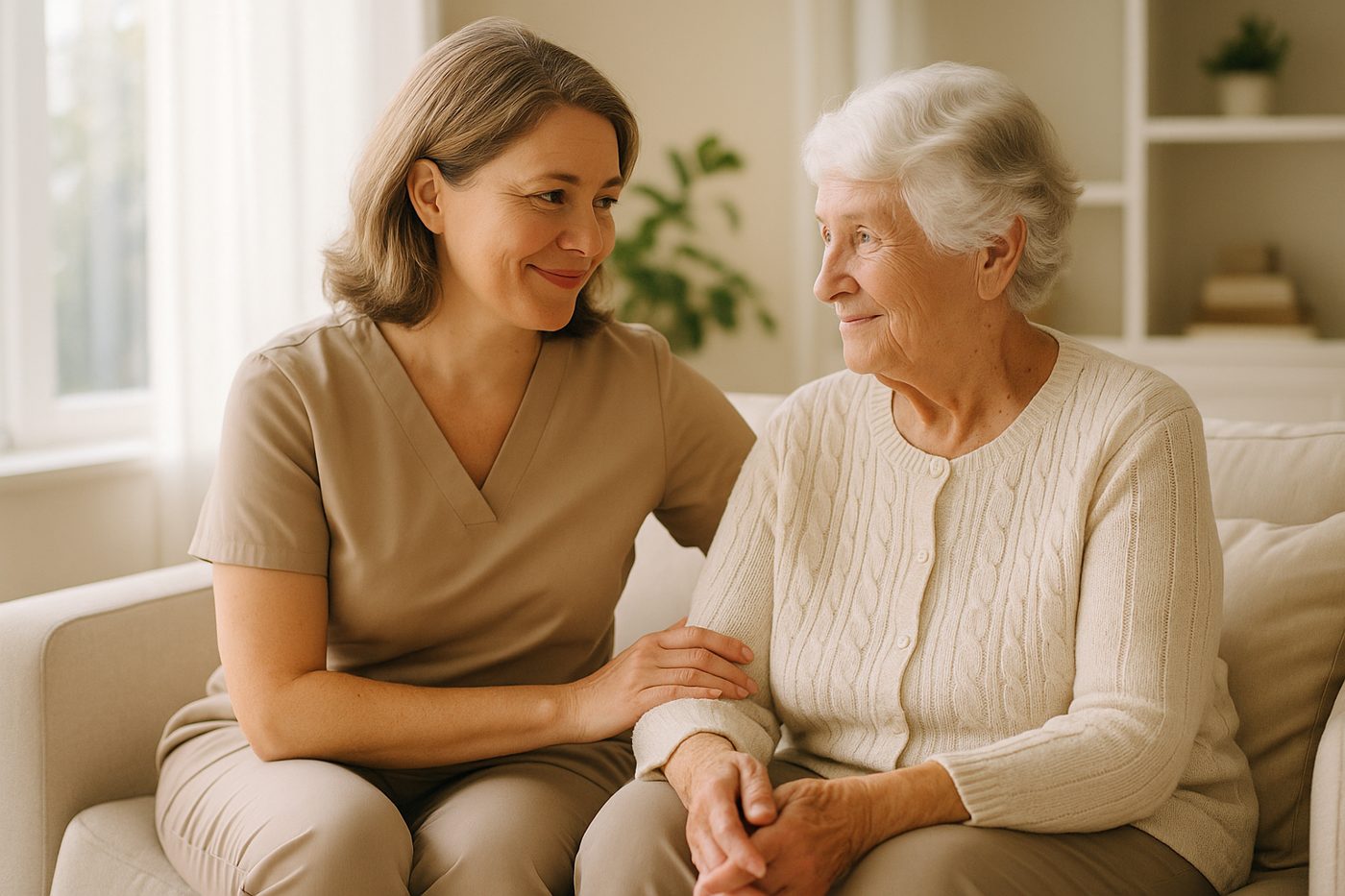
In her own words
A daughter, a father with dementia,
and the thing that was missing.
It was really the missing piece of the puzzle for me in many ways.
The design principle
Family centric, not person centric.
Most care technology is built around one user: the person being cared for, or the one adult child who set it up. That is not what a family is. A family is a grandson who texts, a neighbor with a key, a daughter three time zones away, a sister who wants to help but does not want to intrude, and someone in the next room.
Care Daily is built for all of them at once, which is why the same system can give one person an alert at 3 a.m. and another person a gentle weekly summary, without either of them seeing more than they should.
Everyone, at their own distance
People in the same home, people nearby, and people hundreds of miles away. Each gets what is useful to them at that distance rather than the same firehose.
Across generations
Adult children, grandchildren, siblings, friends and neighbors. Younger family members often carry the most, and they are usually the ones nobody set up an account for.
Nobody is the bottleneck
When one person holds all the information, the family calls that person instead of helping. Shared visibility spreads the load instead of concentrating it.
Caring for a loved one with dementia is the most difficult job I have ever had. This system gives me real-time data about my loved one and alerts me to situations that need my attention.
Talk to the home
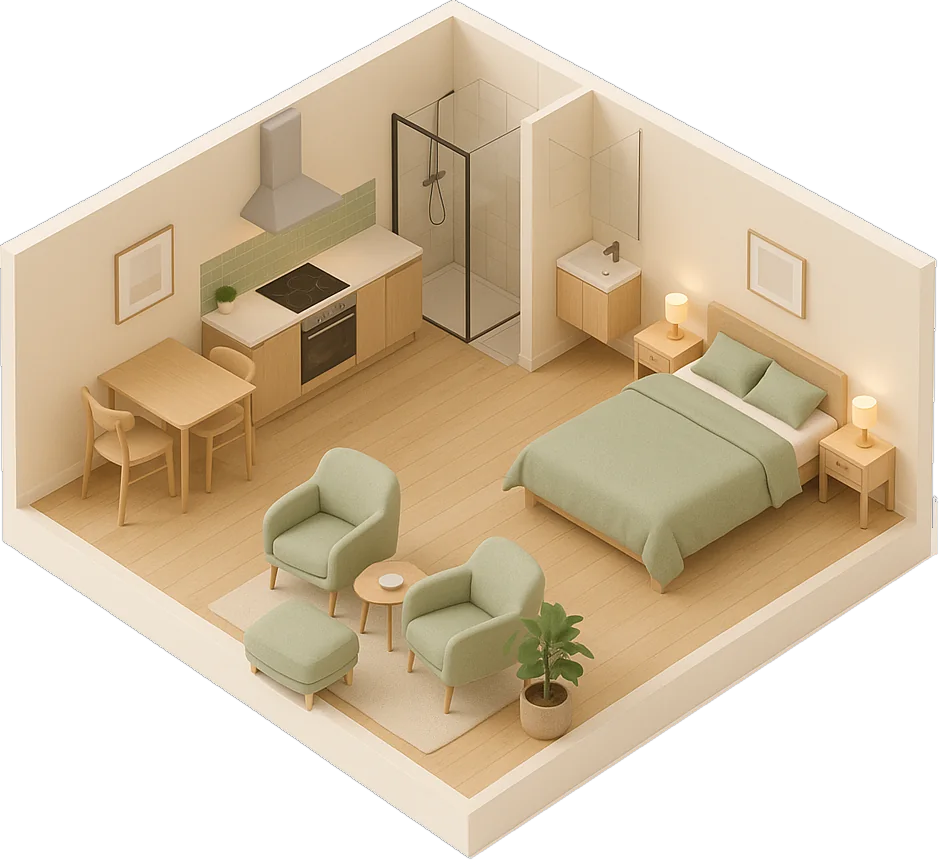
Every home gets its own phone number.
Not an app to download, not a login to remember. The home has a number, and the people who live there can text it or call it and talk to the AI assistant that runs the house. Ask it to turn the lights on. Ask when the last time someone came by was. Say you are going out.
It matters most for the people who will never open an app. A number in a phone's contacts is a technology everybody over eighty already uses fluently, and it is the same number the family can reach.
Who sees what
Role based access, decided by the family.
Dignity is not a setting we apply on someone's behalf. The family decides who is in the circle, what each person can see, and who gets called when something happens. Somebody can be told about a fall without being able to read where their mother goes all day.
Who can see the insights
Sleep, activity and daily rhythm are shared per person, not broadcast. A neighbor on the emergency list does not need a view of anyone's week.
Who gets alerted, and in what order
First, second, third, fourth. The order is set by the family, because they know who actually answers their phone at two in the morning.
What the resident controls
The person living in the home is a participant, not a subject. They can see what is shared and change their mind.
I was a brand new, sleep-deprived caregiver, running up and down stairs every time my father made a noise. Care Daily gave me back my peace of mind.
When something happens
We escalate outward, starting with the person themselves.
The order is the whole design. Going straight to an alarm strips someone of the chance to say "I am fine", and a system that does that gets switched off within a month. So we start with the person in their own home, and only widen the circle when nobody answers.
What that sequence looks like depends entirely on whether anyone is on site, and those are two genuinely different products of the same system.
The family is the response.
Nobody is down the hall. The circle has to widen, in order, with the resident given every chance to answer first.
The person, in their own home
We ask them first. Most of the time they are fine, they answer, and nothing else happens. Nobody's phone rings at midnight for a dropped remote.
Family, friends and neighbors
If there is no response, the people the family put on the list are contacted in the order the family chose.
Staff, if any are present
In a community with a concierge, a night porter or an on-call team, they come next.
The emergency call center, if you want it
Professional monitoring is optional and can be switched on and off. Trained operators call out as one layer; dispatch is a second layer you turn on separately.
Staff first, always.
Where a team is on site and accountable, routing an urgent event through a daughter in another state would be both slower and wrong. So it goes straight to the people who are paid to respond, and the family gets something different.
Straight to the care team
The event reaches staff immediately, in their workflow and in the record they already use, with the context of what led up to it.
The family gets peace of mind, not pages
How she slept. Whether she has been out of her apartment. How this week compares with last. Reassurance on a rhythm rather than alarms they cannot act on.
And the family can still be told
Where an operator and a family both want to be in the loop, they can be. It is a choice the community and the family make together, not a default we impose.
I live alone and want to continue to live in my home as long as I can. I was always worried that if I fell, I could be on the floor for days. Care Daily has taken the worry out for those who care for me and makes me feel very secure.
Professional monitoring
A 24/7 call center, under your own brand.
For providers and partners the whole escalation layer is white-label ready. Your name, your voice, your relationship with the family. Care Daily is the intelligence underneath rather than another logo in the household.
Two layers, separately controlled
Operators making calls is one layer. Dispatching emergency services is a second, and you decide whether it is on.
Subscribe or not
Monitoring is not welded to the product. Turn it on for the residents who need it, turn it off for the ones who do not.
The context travels
An operator is not starting from a voice on a line. The alert arrives carrying what the home already knows about the last hour.
One day I was walking out of the house when my phone notified me that there was water on the bathroom floor. I walked right back in and cleaned it up before any damage could happen.
What it does to a family
The system called them. So they called each other.
There is this system where if something continues to happen that is out of the ordinary, it will actually alert family members that I specify can reach out to him and help him. I have gotten calls from those family members just to make sure I was getting my alerts, or asking, even late at night, do you need me to come by. It increased our communication among family members who you may not always get to see or talk to, and helped them get involved in a way that was comfortable and not overbearing for them.
That is the part that is hard to design for and easy to recognize once you have seen it. The technology is not what holds a family together. It just gives them a reason to pick up the phone.
Answer the question your family keeps asking.
Book a demo and we will show you what "how's mom" looks like when the whole home is answering it.